The Indian EV market isn’t slowing down anytime soon. Walk into any tier-2 city right now and you’ll spot electric scooters weaving through traffic, e-rickshaws lined up outside metro stations, and delivery riders quietly swapping battery packs at street-side stations. Behind every one of these machines sits a lithium-ion pack, and behind every decision to buy lithium battery in bulk sits a procurement choice that can make or break a fleet operator’s margins.
If you’re running an OEM, an e-mobility startup, or a battery assembly unit, you already know the math. Cells and packs are the single biggest input cost on your BOM. Get the sourcing right, and your bottom line breathes. Get it wrong, and even a great vehicle design won’t rescue the business. That’s why the conversation around bulk battery procurement has shifted from “where do I find cells” to “who do I trust to supply consistently, at a fair price, with paperwork that holds up.”
This guide walks through what actually matters when you decide to Buy Lithium Battery in Bulk in India pricing logic, chemistry choices, certifications, and how to vet a supplier without getting burned six months later.
1. Why Bulk Procurement Makes Sense for Indian EV Businesses
Bulk buying isn’t just about chasing a discount. It’s about predictability. When you lock in a supply line with a serious Lithium Ion Battery Pack Supplier, you’re really locking in three things: delivery timelines that match your production schedule, consistent cell chemistry across batches and a warranty trail that your end customers can actually rely on.
Most established assemblers in India see margins improve by 12–18% once they shift from spot purchases to contracted bulk orders. The savings aren’t only on the per-cell price they show up in reduced logistics costs, fewer rejection rates, and far less downtime chasing replacement stock.
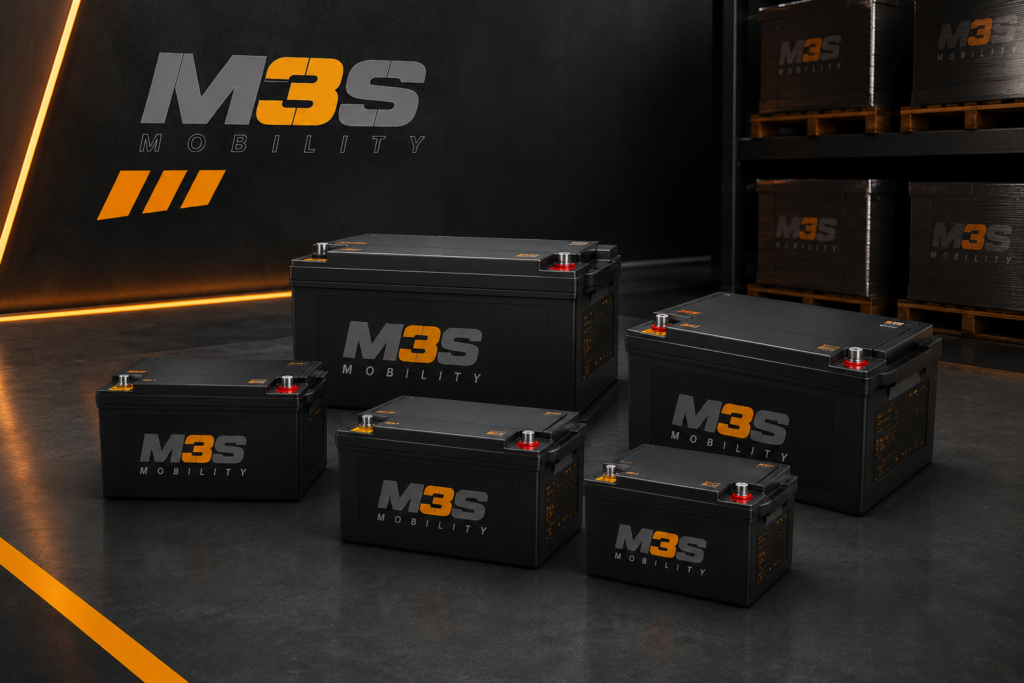
2. Buy Lithium Battery in Bulk: Chemistries That Fit Your Use Case
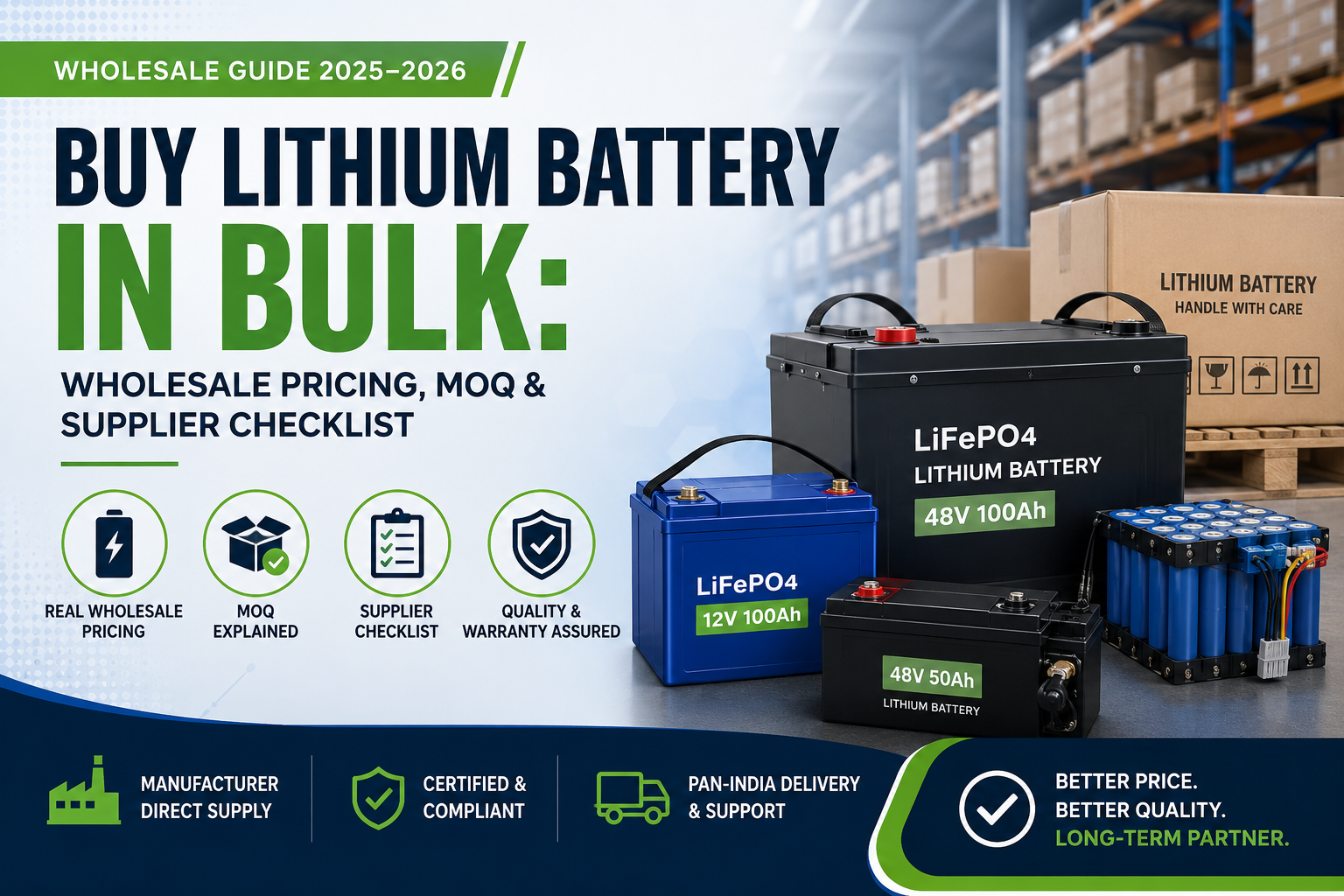
Not every battery suits every vehicle. Modern lithium-ion battery chemistries differ in energy density and cycle life, so the chemistry decision should come before the price negotiation, not after. Choosing LFP for a high-range premium scooter wastes money on weight; choosing NMC for an e-rickshaw fleet wastes money on cycle life you’ll never use. Here’s a quick breakdown of what’s actually moving in the Indian market right now, with realistic wholesale price bands.
| Chemistry | Energy Density | Cycle Life | Best Suited For | Approx. Price (₹/kWh) |
|---|---|---|---|---|
| LFP (LiFePO4) | 90–120 Wh/kg | 3,000–5,000 cycles | E-rickshaws, e-scooters, solar storage | ₹11,000 – ₹14,000 |
| NMC | 150–220 Wh/kg | 1,500–2,500 cycles | Premium e-bikes, EV cars, drones | ₹13,000 – ₹17,000 |
| LTO | 60–80 Wh/kg | 10,000+ cycles | Fast-charging buses, swap stations | ₹22,000 – ₹28,000 |
| NCA | 200–260 Wh/kg | 1,000–1,500 cycles | High-performance EVs | ₹15,000 – ₹19,000 |
LFP has quietly become the workhorse of Indian two- and three-wheeler segments. Safer thermal profile, longer life, and pricing that finally makes sense for budget-conscious buyers. NMC still holds ground in premium segments where range matters more than longevity.
3. What to Check Before You Sign a Wholesale Order
A wholesale invoice tells you the price. It doesn’t tell you whether the supplier will still be answering calls six months from now. Before committing to volume, experienced buyers verify a specific checklist and they verify it on paper, not over a WhatsApp confirmation.
- AIS 156 compliance for any pack going into a registered electric vehicle
- BIS certification on imported cells (mandatory since 2023)
- Genuine cell origin- Grade A cells from CATL, EVE, BYD, Gotion, or Samsung carry traceable serial numbers
- BMS specifications- number of MOSFETs, balancing type (passive vs active), and communication protocol (CAN/UART)
- IP rating for the pack housing- IP67 is the practical minimum for Indian road conditions
- Warranty terms in writing, signed and stamped not verbal assurances
A reliable Electric Vehicle Battery Supplier will hand over test reports without being chased for them. If you have to follow up three times for a UN38.3 certificate or a cell-level CoC, treat that as a warning sign.
4. Pack Configurations You’ll Actually Encounter
The voltage and capacity combinations available in the wholesale market are fairly standardized. Custom requirements are possible, but they always come with tooling charges and longer lead times. Most order sheets land in this range.
| Application | Common Voltage | Capacity Range | Typical Pack Weight |
|---|---|---|---|
| Electric Scooter | 48V / 60V / 72V | 20Ah – 40Ah | 8 – 18 kg |
| E-Rickshaw | 48V / 60V | 100Ah – 140Ah | 35 – 55 kg |
| E-Cycle | 36V / 48V | 10Ah – 17.5Ah | 3 – 6 kg |
| Solar Storage | 12V / 24V / 48V | 100Ah – 300Ah | 12 – 50 kg |
| Telecom Backup | 48V | 50Ah – 200Ah | 25 – 80 kg |
If you’re sourcing a Battery for Electric Scooter projects specifically, the 60V 30Ah and 72V 40Ah configurations are pulling close to 70% of current market demand. Anything outside that range usually means custom cell arrangement, fresh BMS programming, and an extended delivery window.
5. How to Negotiate Wholesale Pricing Without Damaging the Relationship
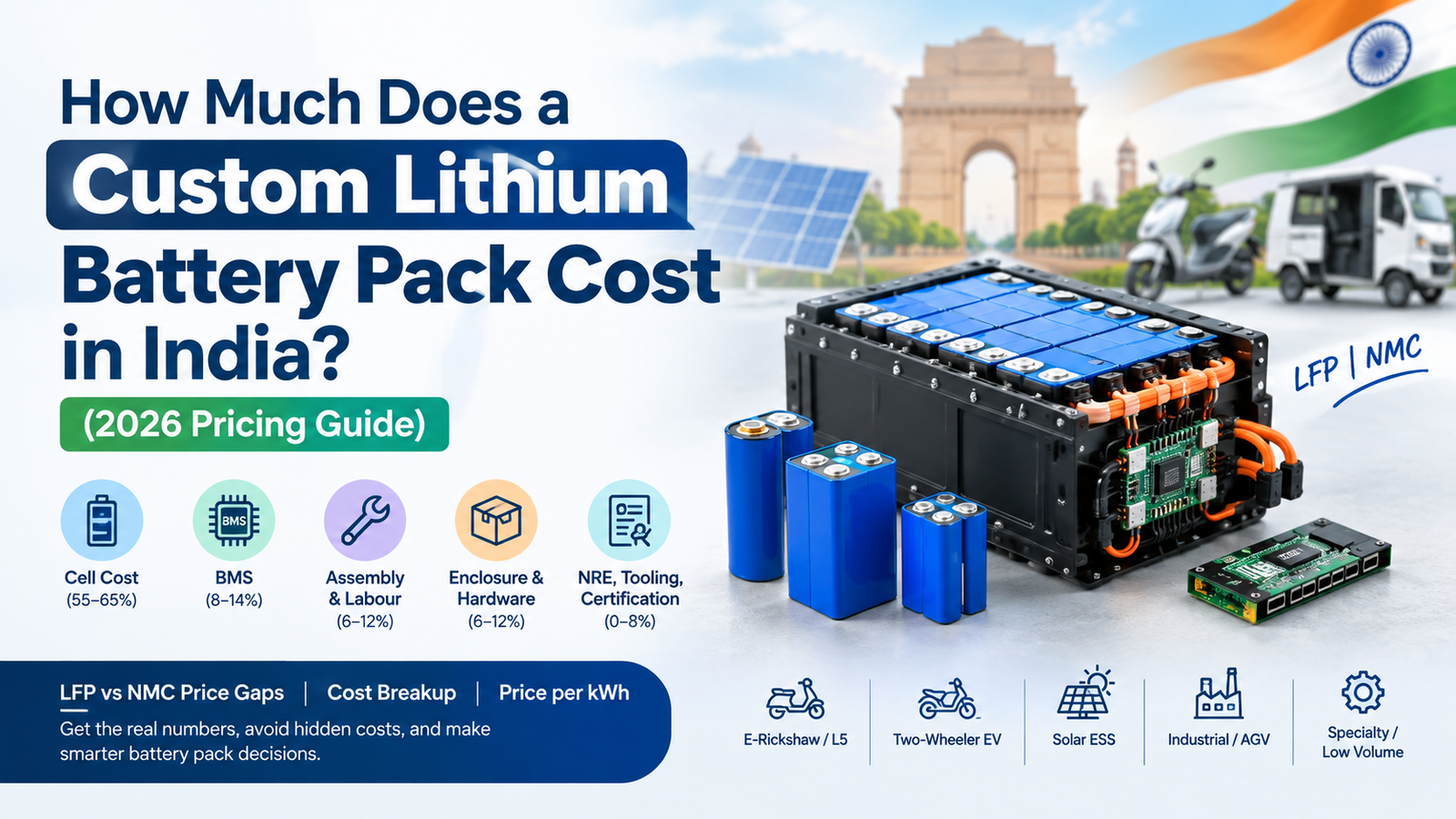
Indian battery suppliers operate on thinner margins than buyers usually assume. The cell itself accounts for 65–75% of the pack cost, and that number the supplier genuinely cannot compress. What you can negotiate is the BMS, the casing, the wiring harness, and the assembly labour together those line items make up roughly a quarter of the total cost. That’s where the real conversation happens.
- Commit to a 6-month rolling forecast instead of pushing for spot discounts
- Offer milestone-based payment terms (40% advance, 40% on dispatch, 20% on receipt)
- Take responsibility for last-mile logistics if you have your own fleet
- Stay flexible on cell brand within the same grade and chemistry
What rarely works is asking for a flat 20% discount on the first quote. Serious suppliers will quietly stop responding and move on to the next buyer in queue.
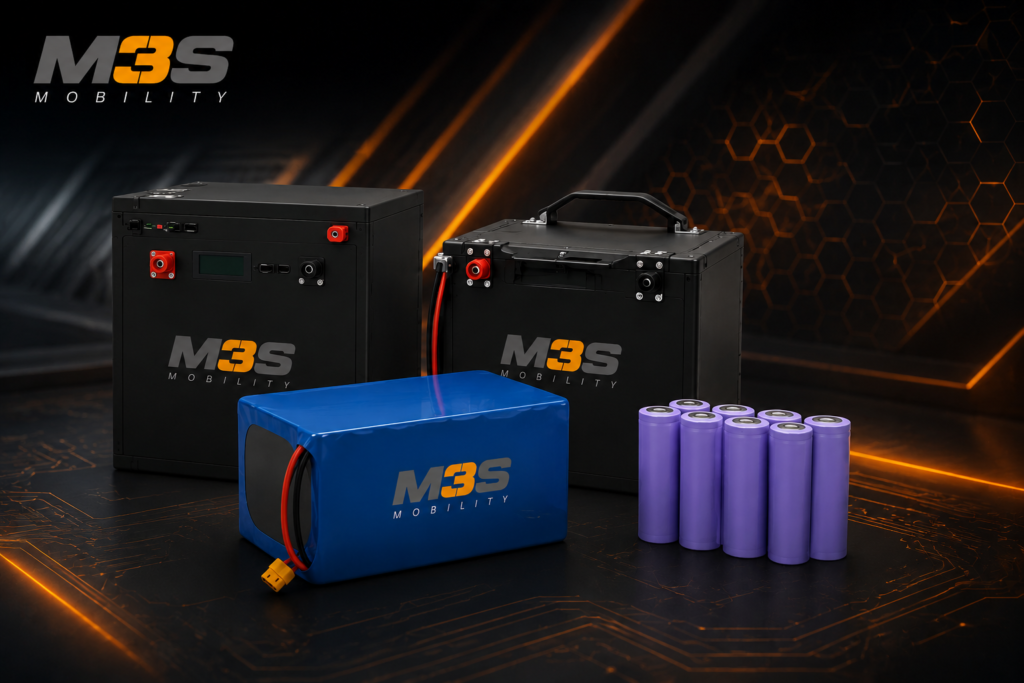
6. Why Domestic Sourcing Is Gaining Ground
The PLI scheme for Advanced Chemistry Cell manufacturing has pulled significant investment into Indian battery production. While the bulk of raw cells are still imported, pack assembly, BMS design, and casing manufacturing have largely moved in-country. For most bulk buyers, this domestic shift translates into measurable advantages over fully imported packs.
- Shorter lead times (3–5 weeks vs 8–12 weeks for imported finished packs)
- GST input credit benefits that improve effective landed cost
- Easier service and warranty claims with on-ground engineering teams
- Customization options that overseas suppliers won’t entertain at the same MOQ
Read This Blog Also- Lithium Battery Manufacturer India | Custom Battery Pack Supplier
Partnering with the Right Wholesale Battery Source
When the time comes to Buy Lithium Battery in Bulk for a serious production line, the supplier you pick will shape your product quality for years, not months. M3S Mobility has built its bulk supply business around exactly these requirements verified Grade A cell sourcing, in-house pack assembly, AIS-156 compliant designs, and pricing structures built for OEMs, fleet operators, and battery assemblers across India.
Whether the requirement is a Battery for Electric Scooter rollouts, e-rickshaw fleets, telecom backup deployments, or solar integration projects, the team at M3S Mobility works on volume contracts that prioritize consistency over one-time discounts.
If you’re scaling production or moving from prototype to commercial run, a single conversation with the right Electric Vehicle Battery Supplier usually saves more than it costs over the next financial year.
Frequently Asked Questions
What does it mean to buy lithium battery in bulk in India?
To buy lithium battery in bulk usually means ordering pack lots for OEMs, fleets, or assemblers-often with negotiated INR/Ah pricing, MOQs, staged deliveries, and written warranty terms rather than retail single-unit purchases.
Which chemistry should I choose when I buy lithium battery in bulk?
LFP is typically preferred for commercial fleets and stationary backup due to cycle life and thermal stability. NMC suits compact, high-energy products. Ask your wholesale partner for cycle data at your duty cycle before you buy lithium battery in bulk.
What certifications should I demand before a wholesale PO?
For EVs, prioritize AIS-relevant compliance plus cell/pack safety evidence (UN38.3, IEC where applicable). Confirm BMS protection features and request CoCs that match the exact SKU you plan to buy lithium battery in bulk against.
How can I negotiate price without hurting quality?
Trade volume certainty, forecast visibility, and multi-quarter offtake for better rates. Avoid forcing cell grade downgrades just to cut unit cost when you buy lithium battery in bulk for production vehicles.
Why source domestically when I buy lithium battery in bulk?
Domestic pack partners shorten lead times, simplify service, and make customization realistic at Indian MOQs-advantages that matter when you buy lithium battery in bulk for ongoing production rather than a one-off import lot.