Electric mobility is growing fast, and so is the need to understand ev battery manufacturers and car battery companies. An electric vehicle battery pack is engineered very differently from a conventional starter battery. Whether you are researching suppliers, comparing brands, or simply trying to choose a reliable battery for a vehicle, the market can feel crowded at first. That is because modern batteries power everything from starter systems in fuel cars to high-voltage packs in electric vehicles, and each type needs different engineering, safety standards, and service support.
For beginners, the good news is that the industry becomes easier to understand once you break it into categories. Car battery manufacturers usually focus on lead-acid, AGM, EFB, or lithium-based automotive batteries for conventional and hybrid vehicles, while ev battery companies concentrate on battery packs, cell chemistry, thermal management, and long-life performance for electric mobility. In India, this space is expanding quickly, with several companies scaling production, launching new technologies, and targeting both domestic and export demand. If you are searching online for a battery manufacturing Company near me, it helps to know what each supplier actually makes before you compare price alone.
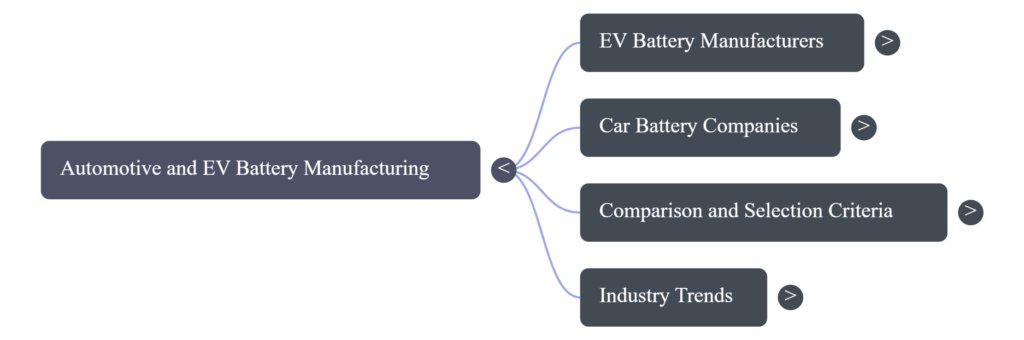
Understanding EV battery manufacturers
Ev battery manufacturers design and produce battery systems for electric vehicles, usually with a strong focus on energy density, fast charging, thermal safety, and cycle life. Unlike traditional automotive batteries, EV packs often combine multiple cells, battery management systems, and cooling components into one engineered unit. The best suppliers are not just making batteries; they are building complete power systems that support range, efficiency, and vehicle safety.
What they usually provide
- Battery cells and modules.
- Pack assembly and testing.
- Battery management systems.
- Thermal and safety controls.
- Warranty and technical support.
A simple example
A two-wheeler EV may use a compact lithium-ion pack, while a passenger EV may need a much larger battery system with advanced cooling and software controls. That is why ev battery companies are often judged by engineering capability, not just production volume.
EV battery manufacturers and car battery companies in focus
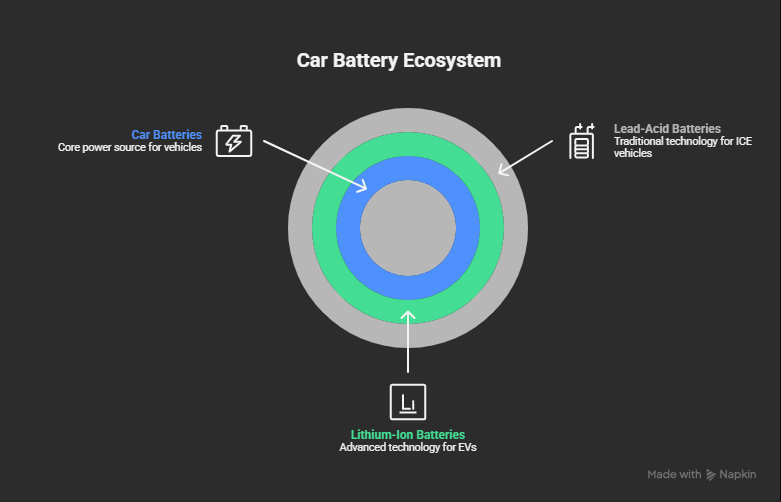
Car battery companies serve a broader market that includes petrol cars, diesel cars, hybrids, commercial vehicles, and aftermarket replacement batteries. Many of these firms are established auto battery manufacturers with a strong history in lead-acid technology, though more are now adding lithium-ion and start-stop solutions. Well-known global players include Clarios and Exide Technologies, while India has strong brands such as Exide, Amara Raja, and Eastman.
What matters most in this segment
- Cold cranking performance.
- Battery life and durability.
- Maintenance requirements.
- Compatibility with vehicle type.
- Service network and replacement support.
For everyday car owners, these factors often matter more than flashy technology claims. A dependable battery that starts well in heat, traffic, and short-trip use is usually the smartest choice.
Auto battery manufacturers to compare
When comparing auto battery manufacturers, it helps to separate the discussion into conventional automotive batteries and EV-related batteries. Conventional batteries still dominate many vehicle categories, especially in replacement markets and internal combustion cars. At the same time, EV battery production is expanding sharply, especially in Asia-Pacific and India.
Good comparison points
- Chemistry used: lead-acid, AGM, EFB, LFP, NMC, or lithium-ion.
- Manufacturing scale and quality control.
- After-sales support and warranty.
- OEM partnerships and vehicle compatibility.
- Sustainability and recycling practices.
A useful mini case study is India, where battery makers are investing in new plants, R&D hubs, and lithium-ion capabilities to support growing EV demand. This shows how auto battery manufacturers are evolving from traditional replacement suppliers into technology-driven energy companies.
Choosing the right supplier
If you are evaluating car battery manufacturers or ev battery manufacturers, start with your actual use case. The best supplier for a fleet operator may be very different from the best supplier for an EV startup or a local retail buyer. For example, a company selling high-volume starter batteries may not be the best fit for advanced EV pack development.
Smart selection checklist
- Confirm whether they make OEM or aftermarket products.
- Ask about battery chemistry and safety testing.
- Check delivery timelines and service coverage.
- Review certifications and production capacity.
- Look for evidence of innovation and recycling support.
If you are searching for a Battery manufacturing Company near me, also check local service availability, installation support, and whether the company handles warranty claims efficiently. A nearby supplier is useful, but a reliable one is better.
Trends shaping the market
The battery industry is being shaped by three major trends: electrification, localization, and sustainability. In India, the EV battery market is projected to grow strongly through the next decade, driven by policy support, charging expansion, and rising EV adoption. Globally, the automotive battery market is also expanding as EVs and hybrids become more common.
What this means for buyers
- More product choices.
- Faster technology improvements.
- Better pricing over time.
- Stronger focus on battery recycling.
For businesses, this means supplier selection is becoming more strategic. Ev battery companies are increasingly expected to deliver not just batteries, but integrated energy solutions with long-term value.
Real-world buying tips
Before you finalize any supplier, think beyond the brand name. The strongest car battery companies usually combine product quality, technical service, and consistent availability. The same applies to EV suppliers, where pack design, chemistry, and lifecycle performance can determine total cost of ownership.
Practical tips
- Compare warranty terms, not only price.
- Match the battery to driving pattern and climate.
- Ask for test reports or certification details.
- Check whether the supplier supports future upgrades.
- Prefer companies with a clear service and recycling process.
This approach helps both consumers and businesses avoid low-quality purchases. It also reduces downtime, which matters for fleet operators and everyday drivers alike.
EV battery manufacturers: how Indian OEMs should evaluate partners
Serious EV battery manufacturers do more than ship cells in a box. They translate vehicle duty cycles into pack voltage, Ah rating, continuous and peak current, thermal paths, and a BMS map that survives Indian summer heat, monsoon humidity, and uneven road loads. For two- and three-wheeler OEMs, that usually means modular LFP packs with field-replaceable modules; for four-wheeler and commercial platforms, it means tighter packaging, stronger crash considerations, and clearer warranty analytics.
When you shortlist partners, compare how EV battery manufacturers handle incoming cell inspection, weld or busbar quality, BMS firmware change control, and after-sales failure analysis. Price-only RFQs hide the cost of downtime. A practical next step is to review a custom battery pack manufacturer process, scan lithium-ion battery manufacturers in India for segment fit, and confirm volume terms if you need to buy lithium battery in bulk for fleet or assembly lines.
Frequently Asked Questions
What separates strong EV battery manufacturers from pack assemblers?
Strong EV battery manufacturers own the specification loop—cell selection, BMS logic, mechanical design, validation, and production controls. Assemblers may build to a drawing but struggle when the vehicle load profile changes mid-programme.
Are car battery companies the same as EV battery manufacturers?
Not usually. Many car battery companies still specialise in 12V lead-acid or start-stop products. EV pack suppliers design high-voltage modules, thermal management, and communication with the vehicle controller.
Which chemistry should beginners evaluate with EV battery manufacturers first?
For most Indian commercial EVs, LFP is the pragmatic starting point for cycle life and thermal stability. Higher energy-density chemistries make sense when packaging space is the binding constraint and the thermal design is proven.
How should fleets compare EV battery manufacturers and auto battery makers?
Ask for cycle-life data at your temperature band, warranty exclusions in writing, service turnaround, and recycling or take-back options. Then pilot a small batch before locking annual volume.
Do EV battery manufacturers in India offer custom packs?
Many EV battery manufacturers and pack specialists can customize voltage, capacity, connectors, and BMS settings when you share vehicle requirements. Ask for sample validation timelines before committing to volume.
Final Words
The battery market is bigger and more diverse than many beginners expect. Ev battery manufacturers are driving electric mobility forward, while car battery companies and auto battery manufacturers continue to support the huge conventional vehicle market. If you compare chemistry, service, warranty, and manufacturing capability instead of price alone, you can choose a battery partner that performs well and lasts longer. For pack design support, see our battery pack manufacturing capabilities, talk to a custom battery pack manufacturer, or contact us for sourcing help.
For businesses, this industry is moving toward smarter, safer, and more localized production. For buyers, that means better choices today and stronger battery technology tomorrow.
Do EV battery manufacturers in India offer custom packs?
Many EV battery manufacturers and pack specialists can customize voltage, capacity, connectors, and BMS settings when you share vehicle requirements. Ask for sample validation timelines before committing to volume.