India generates millions of tonnes of e-waste every year, and most of it still ends up in informal scrap yards. That’s changing. Professional electronics refurbishment is moving from a niche afterthought to a core procurement and sustainability strategy for OEMs, fleet operators, and enterprises across Delhi NCR and beyond.
This guide covers the trends shaping electronics refurbishment in India, how a proper refurbishment process works, which industries are adopting it, and how to choose a partner that won’t leave you with cosmetic “fixes” and silent failures. If you manage IT assets, EV electronics, or industrial boards, you’ll leave with a practical checklist—not marketing fluff.
Electronics Refurbishment Trends Shaping India
Three forces are pushing electronics refurbishment into boardroom conversations: rising component costs, tighter e-waste rules, and pressure to cut Scope 3 emissions without freezing CapEx.
Component lead times haven’t fully normalised since the chip shortages. When a BMS board, charger PCB, or industrial controller fails, waiting 12–16 weeks for a new import isn’t always an option. Refurbishing a known-good platform often restores uptime faster and cheaper than a full replacement—especially when the mechanical housing and harnesses are still fine.
At the same time, buyers are asking vendors for circular-economy proof. Tender documents increasingly mention refurbished or remanufactured options for non-safety-critical equipment. That doesn’t mean every buyer wants “used.” It means they want tested, warrantied, and traceable units that can sit beside new inventory without creating service headaches.
Here’s the thing: informal repair shops aren’t disappearing overnight. What is shifting is B2B demand for documented processes—incoming inspection, component-level repair, burn-in, and serialised outbound QC. That’s the gap professional electronics refurbishment fills.
Circular Economy and E-Waste Rules
India’s E-Waste (Management) Rules put producer responsibility on brands and importers for collection and environmentally sound disposal. Refurbishment sits upstream of recycling: you keep functional value in the economy longer before materials go to recovery.
For procurement teams, the practical takeaway is simple. If a device can be safely restored to a defined performance standard, disposal is the expensive last resort—not the default. Companies that build refurbishment into asset lifecycle plans usually see lower total cost of ownership and cleaner audit trails when CPCB-linked compliance questions come up.
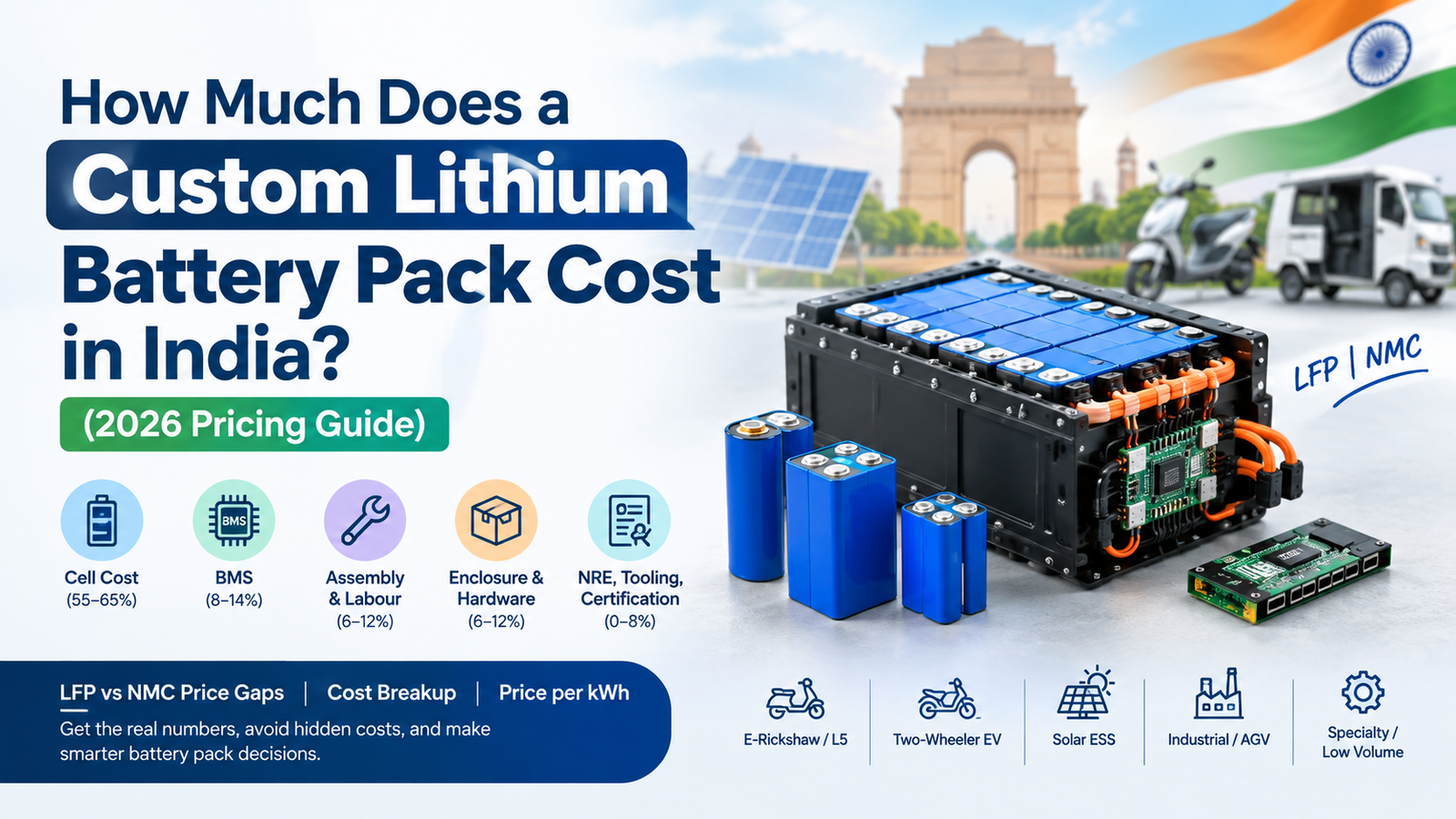
Refurbishment also pairs well with battery programmes. Many devices fail because of pack degradation, not because the board is dead. Pairing board-level work with custom battery pack manufacturing lets you replace ageing cells while keeping the electronics platform intact. That’s circular practice with a clear ROI story.
Process: How Professional Refurbishment Works
A serious electronics refurbishment line isn’t “open, clean, and hope.” It’s a controlled workflow with reject gates. Here’s how a typical B2B flow looks at a facility like M3S Mobility in Noida:
- Intake and triage — Log serials, photograph condition, note failure symptoms, and quarantine units with safety risks (swollen packs, burnt traces, liquid damage).
- Diagnosis — Power-rail checks, firmware reads where applicable, thermal imaging on suspect boards, and isolation of root cause versus secondary damage.
- Component-level repair — Replace failed ICs, MOSFETs, connectors, or passive parts with matched or approved equivalents. No random salvaged chips from scrap bins.
- Cleaning and mechanical refresh — Remove corrosion, replace damaged housings or fans, and reseal where IP rating matters.
- Functional test and burn-in — Run load profiles that mirror field duty cycles. Catch intermittent faults before shipping.
- Documentation and outbound QC — Record work done, test results, and warranty terms. Serialise refurbished stock separately from new builds.
If a partner skips burn-in or can’t show you a sample test report, you’re buying risk. Cosmetic polish without electrical validation is the most common failure mode we still see when companies try “cheap local repair” at scale.
Industries Adopting Refurbishment
Adoption isn’t uniform. Some sectors move faster because downtime costs more than refurbished unit cost.
| Industry | Typical assets | Why refurbishment wins |
|---|---|---|
| EV & mobility | Chargers, controllers, BMS boards | Faster turnaround vs new imports |
| Telecom / IoT | Gateways, routers, metering boards | Large deployed fleets, high swap volume |
| Industrial automation | Drives, PLCs, power supplies | Legacy SKUs hard to source new |
| Enterprise IT | Laptops, docks, power adapters | Cost control + ESG reporting |
| Medical (non-critical) | Peripheral electronics | Strict QC + documentation required |
EV and last-mile fleets are a strong example. When charger PCBs or pack electronics fail in summer heat, operators need working units back in days, not months. That’s why many procurement leads now dual-source: new for growth, refurbished for spares and warranty swaps.
IoT and metering programmes face a different pressure—SKU longevity. Once a gateway design is locked into a city-wide deployment, you can’t casually redesign the board every time a component goes EOL. Refurbishment extends the usable life of that installed base.
Technology Innovations in Electronics Refurbishment
The tools have gotten better. Automated optical inspection (AOI), better thermal cameras, and scripted functional testers make high-volume electronics refurbishment more consistent than hand-probe repair alone.
Firmware and cybersecurity matter more than they did five years ago. Refurbished units that re-enter enterprise or fleet networks need secure wipe, signed firmware where applicable, and clear configuration baselines. Skipping that step creates IT risk even when the hardware is fine.
On the materials side, better understanding of electronics failure modes—solder fatigue, capacitor ageing, connector fretting—helps technicians prioritise root causes instead of swapping parts at random. Data from returned units also feeds design feedback to OEMs: which connectors fail, which thermal paths overheat, which power stages need derating for Indian ambient temperatures.
Battery-aware diagnostics are another quiet innovation. Many “dead devices” are pack or protection-circuit issues. Teams that can test cells, BMS behaviour, and board health together—like M3S Mobility does across battery packs and electronics—close the loop faster than siloed repair shops.
How to Choose a Refurbishment Partner
Don’t pick on unit price alone. Ask questions that expose process maturity:
- Do you provide incoming and outgoing test reports per serial?
- What warranty do you offer on refurbished boards versus cosmetic-only work?
- How do you handle counterfeit or recycled ICs?
- Can you support NDA and ESD-controlled handling?
- What’s your typical turnaround for a batch of 50–500 units?
- Can you integrate with our RMA workflow and spare-pool labelling?
Visit the line if you can. Look for ESD mats that are actually grounded, labelled quarantine areas, calibrated instruments, and technicians who can explain a failure mode without hand-waving. A clean showroom without a real test bench is a red flag.
Also check adjacent capability. If your failures often involve packs, a partner that only does board swap-outs will bounce half your RMAs. M3S Mobility in Noida combines electronics refurbishment with lithium battery pack work, which is useful when devices fail as a system rather than as a single PCB.
Cost, Quality, and When Not to Refurbish
Refurbishment isn’t always the right call. Safety-critical medical life-support electronics, heavily water-damaged boards, or units with unknown fire history may be better recycled. The same goes for designs where counterfeit parts risk outweighs savings.
Where it usually wins: high-volume SKUs with known failure patterns, mechanical assemblies that are still sound, and spare pools for fleets that can’t wait on imports. Compare landed cost of a new unit (duty, freight, lead time, inventory holding) against a warrantied refurbished unit with documented tests. The spreadsheet often surprises finance teams who only compare sticker prices.
For a deeper view of how battery and electronics programmes fit together in India, see our overview on battery pack manufacturing and electronics refurbishment.
Final Words
Professional electronics refurbishment is becoming infrastructure for India’s hardware economy—not a side hustle for broken gadgets. Trends point toward documented processes, tighter e-waste accountability, and buyers who want circular options without sacrificing uptime.
If you’re building a spare strategy for EV electronics, industrial boards, or IoT fleets, start with a pilot batch and insist on test reports. Soft next step: review M3S Mobility’s electronics refurbishment services or contact us with your SKU list and failure symptoms. We’ll tell you honestly whether refurbishment is the right path—or when new builds make more sense.
Frequently Asked Questions
What is electronics refurbishment?
Electronics refurbishment is the process of inspecting, repairing, testing, and restoring electronic assemblies so they meet a defined performance standard for reuse—usually with documentation and warranty, not just a cosmetic clean-up.
Is refurbished electronics reliable for B2B use?
Yes—when the partner runs diagnosis, component-level repair, and burn-in with recorded results. Reliability tracks process quality. Informal repair without test data is a different product and should be treated as such.
How does electronics refurbishment help with e-waste compliance?
It extends product life before recycling, which supports circular-economy goals under India’s e-waste framework. You still need proper disposal channels for units that fail triage, but fewer devices hit the scrap stream early.
What turnaround should we expect for a refurbishment batch?
It depends on volume, parts availability, and failure mix. Many B2B batches move in days to a few weeks once triage is complete. Ask for a sample SLA before committing a large RMA pool.
Can M3S Mobility handle both boards and battery packs?
Yes. M3S Mobility in Noida works on electronics refurbishment alongside custom lithium battery packs, which helps when devices fail as a combined electronics-plus-energy system rather than a single board fault.